
Specialisation · Design · Manufacture · Lifecycle
Physical AI Systems
Machines that sense, decide and act. We engineer embodied intelligence — perception, control and on-device models — into products that work in the real world.
Discuss a physical AI project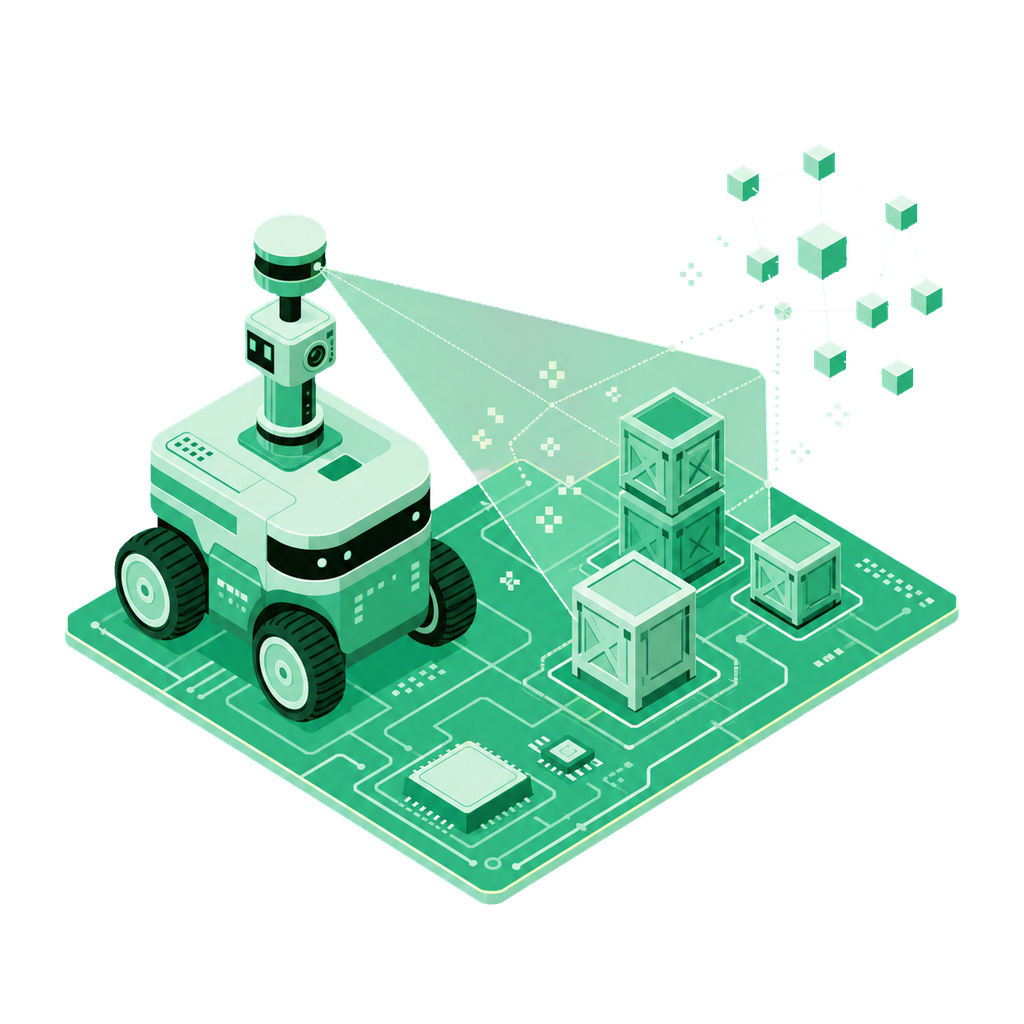
Why Tekt
Intelligence is only useful when it ships
Physical AI fails in the gap between a working demo and a manufacturable product. Our advantage is closing that gap: the same building holds the machine-learning engineers who train the models, the electronics team that designs the compute and sensing, and the production line that builds and tests every unit.
From bionic implant processing systems to machine-learning drive-thru tracking with Summit Innovations, our engineers have matured embodied intelligence across medical, industrial and consumer settings.
How we deliver
Unique value, end to end
Data to deployment
Capture rigs, labelled datasets, training pipelines and quantised deployment onto the exact silicon your BOM can afford.
Hardware-aware models
Models co-designed with the PCB, thermals and power budget — not bolted on after.
Fleet learning loop
Telemetry and OTA pipelines that improve every unit in market — connected to our Lifecycle stream.
Case studies
Case studies
Real programs from this practice — the brief, the engineering approach, and where it landed.
- Case study 01 · Summit Innovations
Machine-learning drive-thru tracking
Summit needed reliable vehicle recognition and tracking across chaotic drive-thru environments. We engineered the ORB-iT™ perception stack and its edge deployment — giving operators a live, trustworthy picture of every lane.
- Case study 02 · CloudFarming
Semi-autonomous field harvesting
Fieldbot had to navigate real paddocks, not lab floors. We delivered the sensing, control and weather-hardened compute that lets the platform work rows semi-autonomously while feeding traceability data back to the farm.
- Case study 03 · Bionic Vision Technologies
Vision processing for bionic sight
A processing chain where latency and reliability are measured against a person’s sight. We engineered the wearable processing systems behind the bionic vision glasses and backpack units to medical-grade standards.
What we solve
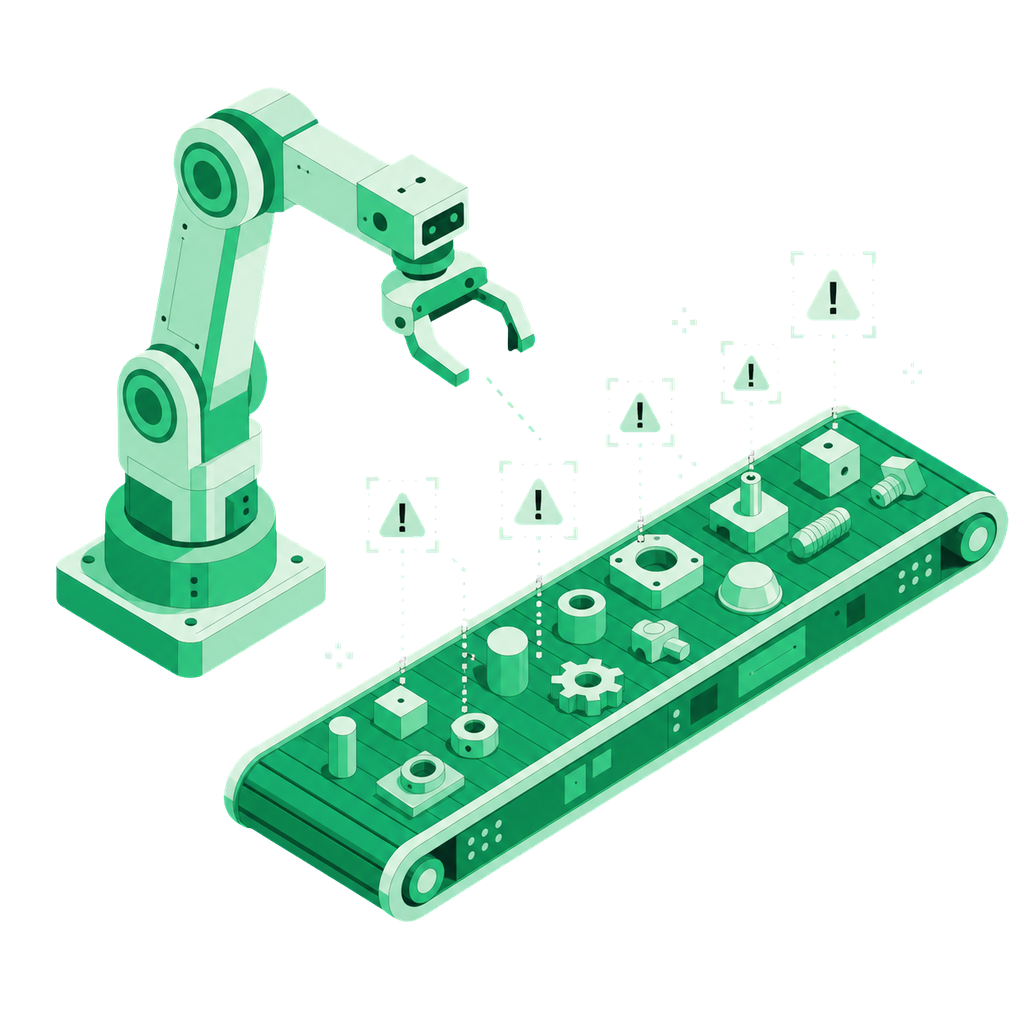
Problems this practice removes
- Demos that never survive contact with real-world lighting, weather and vibration
- Models too heavy for the BOM’s compute and battery budget
- Sensor stacks chosen before the algorithm was understood
- No safety case for a machine that moves
Tools, processes & standards
Who delivers it
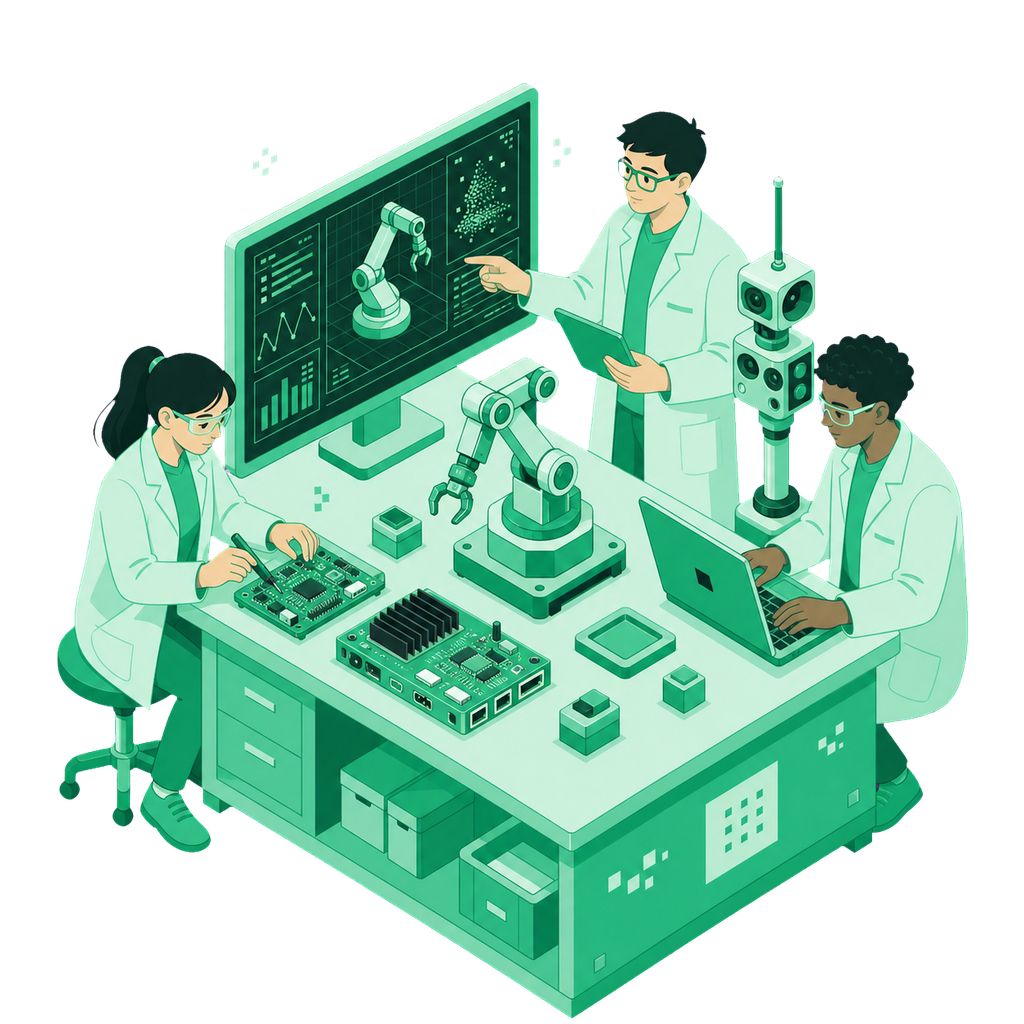
The team behind it
- Machine learning engineer — 5+ years applied CV/ML with an edge-deployment track record
- Robotics / mechatronics engineer — Motion control, sensing and actuation integration
- Embedded compute architect — Jetson and FPGA platforms, power and thermal design
Capabilities
FAQ
Frequently asked questions
Building a machine that thinks?
Bring us the problem — we'll bring the perception, control and production engineering.
↑ Back to top